
Engine Diagnostics Explained in Under 3 Minutes: What Your Venice FL Mechanic is Actually Scanning

We’ve all been there. You’re cruising down the Tamiami Trail, enjoying the Florida sunshine, when suddenly a little amber glow catches your eye. The dreaded check engine light. Your heart sinks a bit, and your mind immediately starts racing: How much is this going to cost? Is my car about to break down? Who can I trust to fix this without getting ripped off?
At Gibson's Auto Care, we see that look of worry every day. As a family-owned and operated shop right here in Venice, we know that your car isn't just a machine: it’s how you get your kids to school, how you get to work, and how you enjoy our beautiful Gulf Coast. That’s why we believe in total honesty and integrity. We don’t want you to be afraid of that light.
In this post, we’re going to pull back the curtain. We’re going to demystify engine diagnostics in Venice, FL, and explain exactly what your mechanic is doing when they plug that "magic box" into your car. And the best part? We’ll do it in about three minutes of reading.
What Exactly is an Engine Diagnostics Scan?
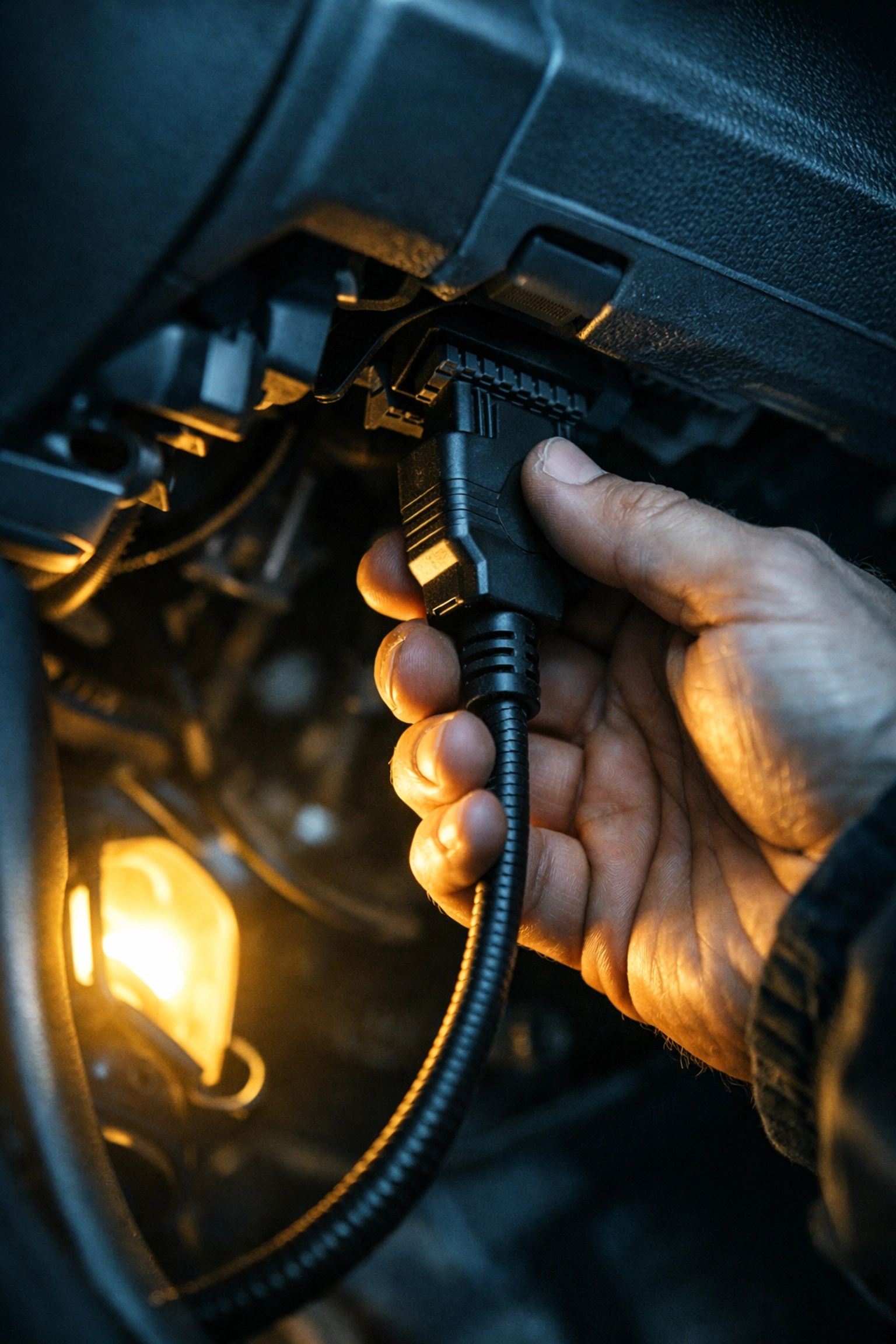
Think of a diagnostic scan like a visit to the doctor for a check-up. When you aren't feeling well, the doctor uses tools like a stethoscope or a thermometer to figure out what’s wrong. Your car is the same way. Since 1966 (and much more advanced since 1996), cars have been equipped with an On-Board Diagnostics port, or OBD-II port.
This port is usually tucked away under your dashboard. When you bring your vehicle to a professional mechanic in Venice, FL, we plug a sophisticated diagnostic scanner into that port. This scanner "talks" to your car's computer systems: technically known as the Powertrain Control Module (PCM) or Engine Control Unit (ECU).
The computer has been watching your car's every move. If a sensor detects something out of the ordinary: like a drop in fuel pressure or a misfiring spark plug: it stores a "trouble code." Our scanner retrieves these codes, giving us a starting point for the repair.
What Your Mechanic is Actually Scanning
Many folks think the scanner just tells us "replace the oxygen sensor." In reality, it’s much more complex. A high-level diagnostic scan looks at several major systems simultaneously:
1. The Engine and Transmission
The scanner checks for timing issues, fuel-to-air ratios, and engine temperature. For the transmission, it monitors gear shifting, fluid pressure, and sensor data to ensure your car is moving smoothly through its gears.
2. The Exhaust and Emissions System
Living in Florida, we want to keep our air clean. The scan checks your catalytic converter, oxygen sensors, and exhaust gas recirculation system to ensure you aren't pumping excess pollutants into the atmosphere.
3. Fuel Injectors and Ignition Coils
If your car is stuttering or "shuddering" when you accelerate, the diagnostic tool can pinpoint exactly which fuel injector is clogged or which ignition coil is failing to provide a spark.
4. Braking and Suspension
Modern cars have sensors for the Anti-lock Braking System (ABS) and even the suspension. The scan can tell us if a wheel speed sensor is glitchy or if your electronic stability control has a fault.
5. Airflow and Coolant Systems
Your engine is essentially a giant air pump. The scanner looks at the Mass Airflow Sensor (MAF) and the coolant temperature sensors to make sure the engine isn't running too hot or struggling to "breathe."
Why the "Code" is Just the Beginning
Here is where the integrity of your shop really matters. You might go to a big-box parts store where they "read the code for free." They might tell you, "The code says it's an O2 sensor," and sell you a $150 part. You install it, and guess what? The light stays on.
That’s because a code is a symptom, not always the cause.
For example, a code for a "lean fuel mixture" could mean a bad sensor, but it could also mean a vacuum leak, a dirty fuel filter, or a failing fuel pump. A simple code reader can't tell the difference: but an expert auto repair specialist in Venice, FL can.
At Gibson's Auto Care, we follow a strict 4-step process:
Define the Symptom: We listen to you. Does the car make a grinding noise? Does it squeal on cold mornings?
Pull Evidence: We get the digital codes and look at "live data" while the engine is running.
Form a Hypothesis: Based on years of experience, we narrow down the likely culprits.
Test to Confirm: We don't just guess. We perform manual tests: like a smoke test for leaks or a pressure test for the fuel system: to be 100% sure before we recommend a fix.

The Gibson’s Difference: Honesty and Peace of Mind
We know that top common car problems can be stressful. Our goal is to make the process as transparent as possible. We’re a family shop, and we treat our customers like neighbors: because you are!
We don't believe in "upselling" you on things you don't need. If the diagnostic shows a loose gas cap is the reason your light is on, we’ll tell you exactly that. If it’s something more serious, we’ll explain the "why" and the "how" so you can make an informed decision.
To give you even more peace of mind, we stand behind our work with a 24-month/24,000-mile warranty. We want you to drive away from our Venice shop feeling confident that your car is safe and reliable.
Is it Safe to Drive with the Check Engine Light On?
This is a question we get all the time. The answer depends on the light itself:
Steady Light: If the light is on but not flashing, your car has detected a problem that needs attention soon. You don't need to pull over immediately, but you should book an appointment for engine diagnostics in Venice, FL within the next day or two.
Flashing Light: This indicates a "major misfire" that could be damaging your catalytic converter (a very expensive part). If the light is blinking, pull over safely and stop driving. This is an emergency situation for your engine.
Preventative Maintenance: Keeping the Light Off
The best way to handle engine diagnostics is to avoid needing them in the first place! Regular car maintenance is the secret to a long-lasting vehicle.
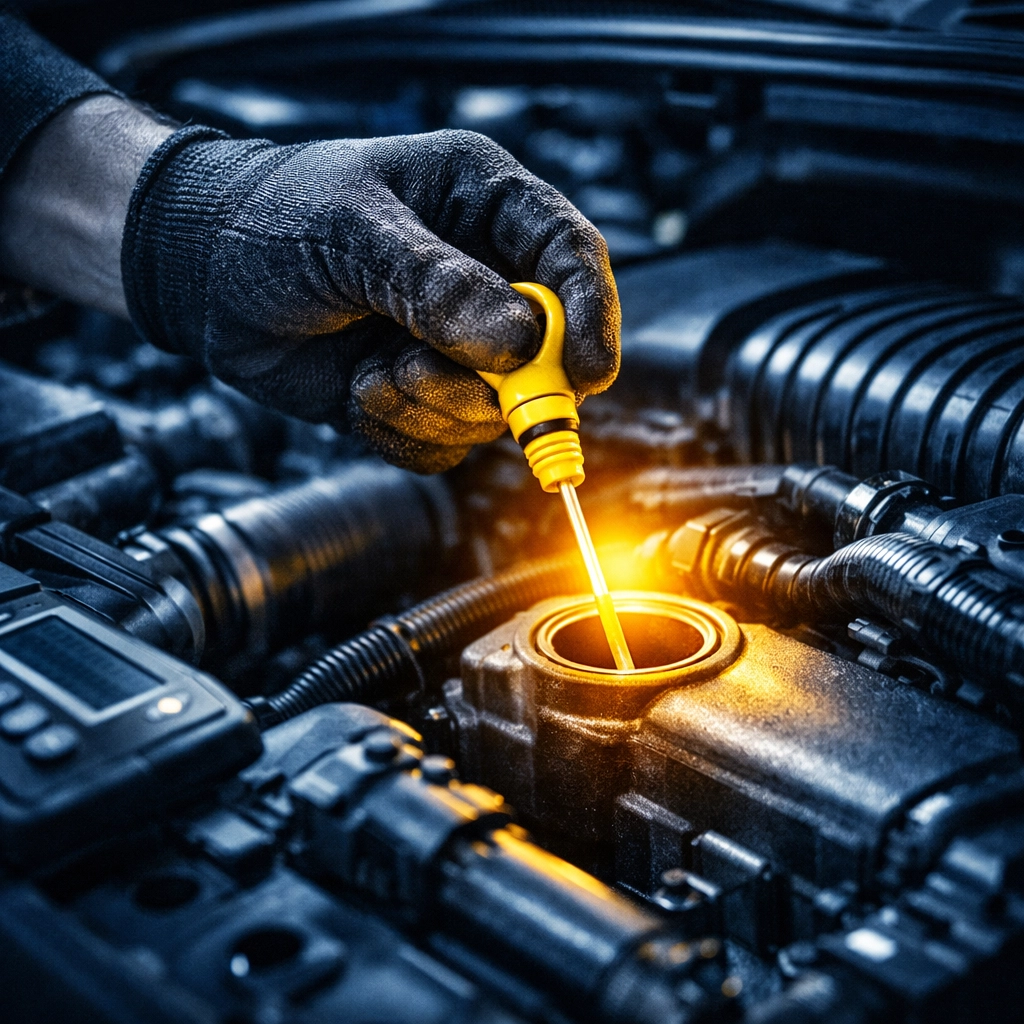
Oil Changes: Fresh oil keeps the engine clean and prevents sensors from getting "gunked up."
Filter Replacements: A clean air filter ensures your engine doesn't have to work overtime.
Tire Care: Believe it or not, things like tire rotation and proper tire pressure can prevent sensors related to your traction control and braking systems from triggering a warning.
Your Checklist for the Mechanic
When you bring your car into Gibson's Auto Care for a diagnostic, it helps us if you can answer a few questions:
When did the light first come on?
Was it raining or particularly humid (a classic Venice, FL morning)?
Did you notice any strange smells, like burning oil or rotten eggs (sulfur)?
Did the car feel different: perhaps a vibration in the steering wheel or a hesitation when you hit the gas?
The more information you give us, the faster we can solve the puzzle and get you back on the road.
Visit Gibson's Auto Care in Venice, FL
Don't let a mystery light ruin your week. At Gibson's Auto Care, we combine the latest diagnostic technology with old-fashioned family values. We’ll get to the bottom of the issue, explain it in plain English, and get you back to enjoying your life in Venice.
Whether you need a simple oil change or complex auto repair in Venice, FL, we’re here to help.
Ready to clear that light? Contact us today or schedule your service online. We look forward to seeing you at the shop!
📍 22 South Venice Blvd, Venice, FL 34293 📞 941-451-8801

Comments